
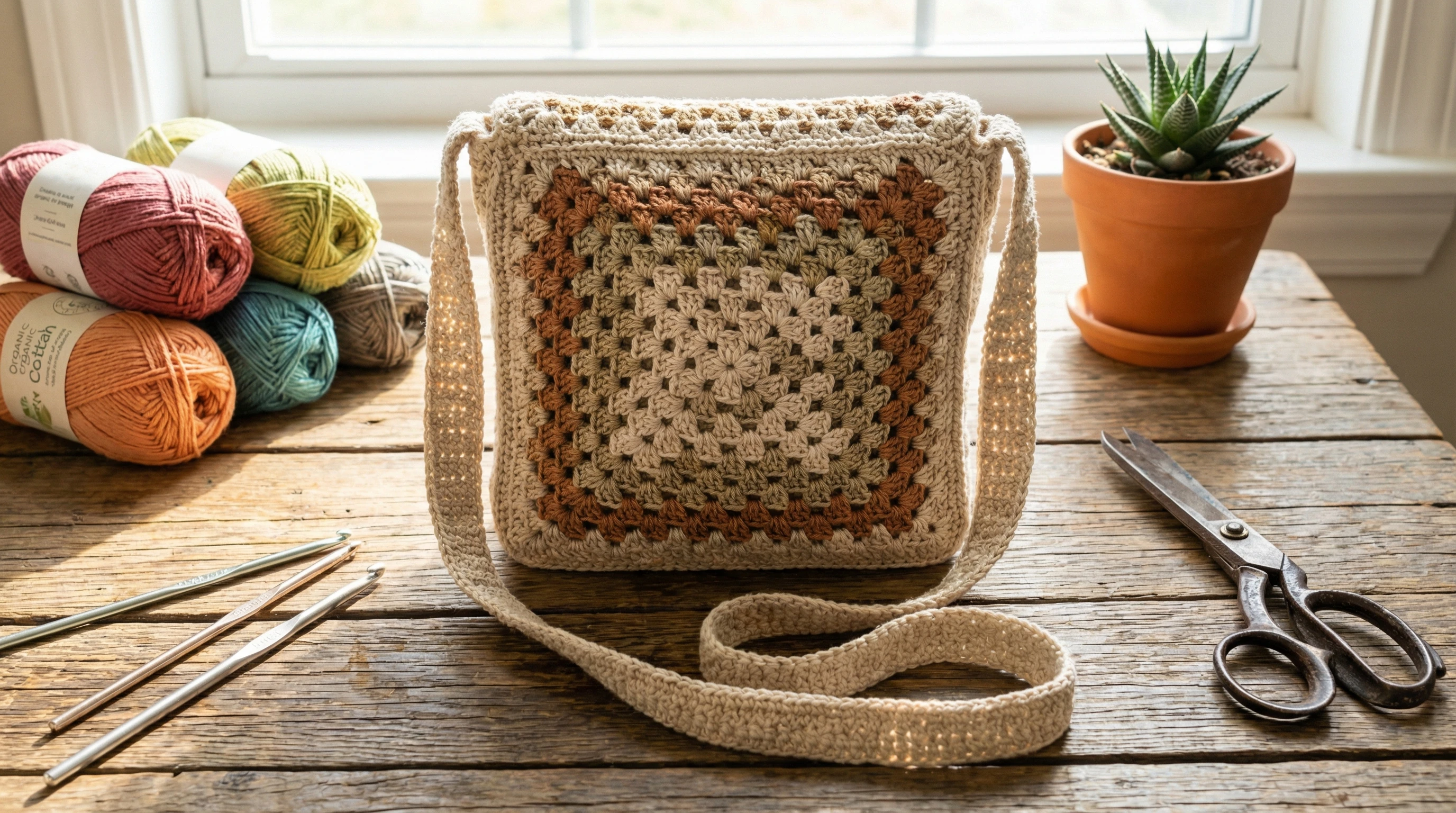
Crocheting your own crossbody bag with organic cotton is a fun way to create something stylish, practical, and eco-friendly. Whether you’re just getting into crochet or you want a new weekend project, organic cotton is a fantastic yarn choice. I’m going to take you through why this yarn is so great, the supplies you’ll need, and the steps you’ll follow, from your first chain stitch to adding a sturdy strap and lining. Along the way, I’ll answer a few common questions, such as whether cotton yarn works well for these types of bags, and I’ll touch on the trends keeping crossbody bags so popular in 2026.
Why Crochet a Crossbody Bag with Organic Cotton?
Organic cotton yarn is a smart pick if you want to keep your projects sustainable and skin-friendly. It’s made from cotton grown without harmful chemicals, and most brands focus on using less water and avoiding toxic dyes, making it a better option overall. Bags made from organic cotton tend to feel soft, yet they’re durable enough for everyday use.
Crocheting your own bag lets you control color, shape, and size. Whether you choose earth tones or trendy colors, the result is always unique to you. Plus, it feels great to walk around with a bag you made with your own two hands. Beyond that, crafting your own accessory connects you to a community of DIY makers who appreciate slow fashion and the stories behind handmade goods.
Getting to Know Cotton Yarn for Crochet Bags
Cotton yarn is fantastic for bags, mainly because it’s durable and holds its shape better than acrylic or wool. If you’re wondering, “Can I crochet a crossbody bag with cotton yarn?” the answer is yes! Cotton is one of the best options around when you don’t want a bag that stretches out or pills easily.
When shopping for cotton yarn, look for organic labels if you’re keen on keeping your bag eco-friendly. Certified organic cotton yarns usually have a tighter twist and a smoother finish. This means fewer snags as you work and a bag less likely to warp over time. Brands like Lily Sugarn Cream Organic, Cascade Ultra Pima, and Blue Sky Fibers Organic Cotton are worth checking out. Make sure to pick a weight that matches your pattern; medium (worsted) is a safe bet for sturdy bags that won’t flop over.
Organic cotton yarn also tends to hold color beautifully. Colors inspired by the natural world, like moss green or terracotta, are not only trendy for 2026 but also forgiving if you’re new to colorwork. By choosing organic cotton, you’re also supporting agricultural practices that are better for the earth and for the workers who grow the cotton.
What’s the Best Material for a Crochet Crossbody Bag?
Cotton is a top pick, but it’s not the only option if you’re aiming for durability. Here’s a quick rundown of what’s out there for crocheting bags:
- Organic Cotton: Soft, washable, natural, and less likely to pill. This is my go-to for everyday use.
- Recycled Cotton: Great if you’re going for sustainability on a budget. Slightly less consistent texture but suitable for sturdy projects.
- Hemp or Linen Blend: Super strong, and these blends add a touch of structure if you want a bag that keeps its shape even more.
- Acrylic: Not as eco-friendly, but often used for novelty colors and sparkly effects. Tends to stretch out with use.
I always recommend using organic materials for anything that comes into contact with your skin, especially if you have sensitivities. Organic cotton is essential if you want a bag that’s gentle, breathable, and easy to wash. Hemp and linen blends can provide an extra level of durability and a slightly rustic look, which aligns with today’s mindset toward mindful, practical fashion.
Are Crochet Crossbody Bags Still in Style for 2026?
Crochet crossbody bags keep appearing on runways and in street-style roundups every season. For 2026, the trend is expected to persist, but with a twist. Think natural fibers, minimalist shapes, and clever textures. Organic cotton fits well because people are seeking sustainable fashion choices now more than ever. Handmade bags have also become super popular on platforms like Etsy, Pinterest, and Instagram, proving that personal, one-of-a-kind pieces aren’t going anywhere soon.
If you want your bag to feel extra current for 2026, try adding chunky textures or choosing colors inspired by nature. Neutral shades like sand, olive, or deep ocean blue are all over the place this year. For finishing touches, wooden buttons, shell ornaments, or a tassel add a next-level cool, personal vibe. Customization is more than a trend; it’s a way to make your accessory your own conversation starter.
What You’ll Need: Supplies for a Cotton Crochet Crossbody Bag
Crochet doesn’t take much to get started, but a few simple tools make the process way smoother. Here’s what’s in my project bag every time:
- Organic Cotton Yarn: About 200–300 yards (for a small to medium bag). Go for worsted weight if you want something solid.
- Crochet Hook:
-
- Check your yarn label, but a size H (5.0 mm) or I (5.5 mm) usually gets a good, tight weave.
- Scissors
- Stitch Markers:
-
- Super useful for marking the edges of your bag or keeping count of rounds.
- Tapestry Needle:
-
- Handy for weaving in ends and sewing pieces together.
- Lining Fabric (optional):
-
- Pick a lightweight cotton for lining if you want to keep items from poking out through stitches.
- Button, Snap, or Magnetic Closure (optional but helps keep things secure)
Having all your supplies ready before you start makes the project run more smoothly, and it’s easier to keep your stitch tension consistent when everything is at hand. If you want an extra touch of flair, you could prepare a handmade fabric label or a small tag to sew inside your bag—a charming detail that sets your finished piece apart.
Step-by-Step Guide: Crocheting an Organic Cotton Crossbody Bag
This is a classic compact bag that’s sleek and easy to wear. Adjust the size to make it bigger or smaller; the basics stay the same. Making your own crossbody bag is about finding what works for you, so don’t be afraid to switch things up as you go.
- Start with a Foundation Chain: Chain enough stitches to match the width you want your bag to be (usually 30–36 for a phoneandwallet size).
- Crochet the Base Rows: Single crochet (SC) into each chain. At the end, chain 1, turn, and SC across again. Repeat rows until the base rectangle is half your desired height.
- Build the Body: Continue working SC in the round (up sides, across the bottom, down the other side, and across the top edge). Use a stitch marker at the end of the round so you don’t lose your place. Keep going until your bag is tall enough. You can play around with stripes or add simple textures (like half-double crochet or granny-style patterns) if you want a different look.
- Add the Strap: For a crossbody bag, measure a strap that’s around 40–50 inches, depending on your height. Attach yarn at one side and crochet a strong chain (I usually double up the chain and slip stitch back over it to strengthen). Sew the strap’s other end to the opposite side, making sure it’s flat, not twisted.
- Fasten Off and Weave In Ends: Cut the yarn with a little room, pull through, and use your tapestry needle to tuck the ends inside the bag.
- Lining (Optional): Cut fabric just slightly larger than your bag, fold over the edges, and sew the sides for a pouch. Handsew the lining to the top inside edge for a polished finish.
- Add a Closure: Sew on a button, attach a snap, or use a magnetic fastener. You can do a simple button loop with a chain stitch if you want to keep things basic.
That’s the backbone, but the real fun comes from picking stitches, adding color patterns, or customizing with fringe and beading. Crocheting at a relaxed pace helps you spot mistakes easily and enjoy the process from start to finish. Track down ideas for bag embellishments in crochet magazines and online communities—there are endless ways to personalize your work!
Practical Tips for Success
A few things help keep your crocheted cotton bag looking great and lasting a long time:
- Use a Tight Stitch: Tighter stitches (single or half-double crochet) help your bag hold its shape, so heavy items don’t stretch it out.
- Reinforce Stress Points: With cotton yarn, the strap and top edge are where you’ll get the most wear. I double-stitch these spots for extra strength.
- Block Your Bag: Dampen the bag and shape it flat, letting it dry fully before use. Blocking helps set the shape and neatens stitches.
- Wash Wisely: Organic cotton can shrink a bit, so always use cold water, wash gently, and airdry flat.
- Get Social: If you hit a snag, check in with online crochet forums or video tutorials. Many crocheting communities share creative troubleshooting tips and can help you out of any tight spot.
Frequently Asked Questions
Can I crochet a crossbody bag with cotton yarn?
Yes! Cotton yarn, especially organic cotton, is great for crocheting bags because it holds its shape, handles daily use, and washes up nicely. It’s a good pick if you want a sturdy, breathable, and eco-conscious option.
What is the best cotton for crochet crossbody bags?
The best cotton is organic, tightly spun, and medium-weight (worsted). It’s strong enough for daily use but still soft in your hands. Make sure your yarn choice matches your pattern and don’t be afraid to try out a few brands to find your favorite feel.
What is the best material to make a crochet crossbody bag?
Organic cotton stands out for its natural, gentle feel and strength for everyday bags. Recycled cotton blends or linen are other solid choices, but I keep coming back to organic cotton because it balances environmental impact with looks and durability.
Are crossbody crochet bags in style in 2026?
They definitely are! More sustainable, handmade accessories are on trend, and minimalist, earth-inspired crochet bags fit right in. Playing with color palettes, adding cool textures, and using eco-yarns keeps things fresh for 2026.