
Crochet is having a real moment right now, especially in organic markets and at handmade fairs where people love stumbling upon unique, sustainable finds. I’ve spent plenty of weekends hauling a stack of cozy crochet pieces to farmers’ markets, and it’s honestly one of the most rewarding ways to share your creativity with the world. If you’re wondering how to succeed in selling your crochet work at organic markets, I’ve learned that success is about more than just having eye-catching products. It’s about understanding trends, building your own brand, and giving shoppers a reason to remember you long after they leave your table.
Spotlight on the Most Profitable Crochet Items to Sell
Choosing what to make and sell is a pretty big deal, especially if you’re hoping not just to break even but actually make some money. After a lot of trial and error, I’ve found that practical items, things people use every day, and supertrendy accessories tend to fly off the table. Here’s what’s worked great for a lot of other crochet sellers:
- Tote Bags and Market Bags: Shoppers at organic markets love reusable things, and cotton crochet bags are sturdy, eco-friendly, and always in demand. You can offer variations in color and pattern, and adding pockets or buttons can make all the difference when someone is picking out their new favorite bag.
- Buckets, Hats, and Sunhats: With retro styles and bright colors everywhere, especially among Gen Z, hats are an absolute favorite. These are perfect for summer markets and festival crowds, and putting your own twist on designs with funky stripes or floral accents grabs attention fast.
- Crop Tops: These are a go-to in warm months and for festivalgoers. You can customize them with colors and patterns that people love right now. Adjustable straps or fun closures can make your pieces comfortable and fit a wider range of body types with ease.
- Reusable Face Scrubbies and Spa Sets: Folks who shop at organic markets often appreciate sustainable swaps for disposable items. Soft, washable scrubbies make self-care greener and are often bought in sets—an easy upsell alongside washcloths or handmade soaps if you have vendor friends.
- Plushies and Amigurumi Toys: These adorable little creations catch the eyes of kids and collectors alike, and smaller plushies make great impulse buys. Consider seasonal themes, such as bunnies for spring or pumpkins for fall, to match the market’s festive mood.
- Plant Hangers: Indoor plants are everywhere these days, and decorative crochet plant hangers add appeal to any plant display. Pairing a hanger with a mini plant or pot is a clever way to make a special bundle that stands out from just selling the hanger alone.
Keep in mind your profit also depends on the price of your materials and the time each item takes. Quick-to-make accessories and smaller items like earrings or bookmarks can add up fast since they’re affordable and easy for customers to grab on a whim. And if you’re crafty with color combinations or textures, you can offer sets that encourage buyers to buy more in one go.
Why Gen Z and EcoMinded Shoppers Are Obsessed with Crochet
Crochet isn’t just trending among crafters. It’s absolutely taken off among the younger crowd, especially Gen Z. I’ve noticed many younger shoppers love crochet for a few big reasons:
- Vintage Style is Back: Y2K fashion, granny squares, baggy hats—Gen Z is obsessed with retro vibes, and crochet kitsch fits it perfectly. Crochet lets them add bold or playful touches to their look, and it’s a personal style statement that mass-produced fast fashion just can’t match.
- Sustainability: A handmade, naturalfiber bag is way better for the planet than another plastic tote. Many young buyers want something unique and eco-conscious, especially if you share info about your yarn sources or upcycle scraps into new items.
- DIY Culture: There’s a real appreciation for handmade and for supporting local makers rather than big brands with mass-produced goods. When people shop at markets, they like being able to meet the maker, ask how something was made, and support their local community.
On top of that, you’ll spot crochet making the rounds on TikTok, Instagram, and Etsy. Trendy creators post their own patterns, haul videos, and honest reviews. A lot of buyers, especially younger folks, get inspired to buy or learn crochet by scrolling their social feeds. If you want to keep up, checking out hashtags like #crochet, #grannysquare, and #handmadewithlove is a pretty handy way to get inspired. Watching what patterns or products pop up most can give you solid ideas for your own table.
Building a Profitable Crochet Business in Organic Markets
I’ve learned that succeeding in organic markets with crochet isn’t just about showing up with pretty stuff on a table. It’s about planning, understanding your customer, and making the most of what the market has to offer. Here’s a run-down of what I focus on to keep things running smoothly and profitably:
- Choose Your Niche: Picking a lane helps your products stand out. Maybe you’re the person known for cozy pet sweaters or for bright festival accessories. Buyers remember a theme, and returning customers love seeing what’s new in your signature style.
- Quality Matters: It’s tempting to work fast, but clean finishing, secure weaving, and natural materials are super important. When customers feel the craftsmanship in your work, it sets you apart. People are much more likely to return or recommend you to friends when the quality matches or beats their expectations.
- Pricing That Makes Sense: I always factor in my yarn and supplies, plus the hours of actual making. I check similar products online and balance my price with what feels fair. But I also make sure it covers my effort and leaves room for a profit—there’s no use burning out for pocket change.
- Batch Work: Certain items sell faster, so I make multiples ahead of time. Batch crocheting similar pieces saves yarn, time, and effort, and helps keep my table well-stocked. Having a healthy inventory means I never lose sales on busy days.
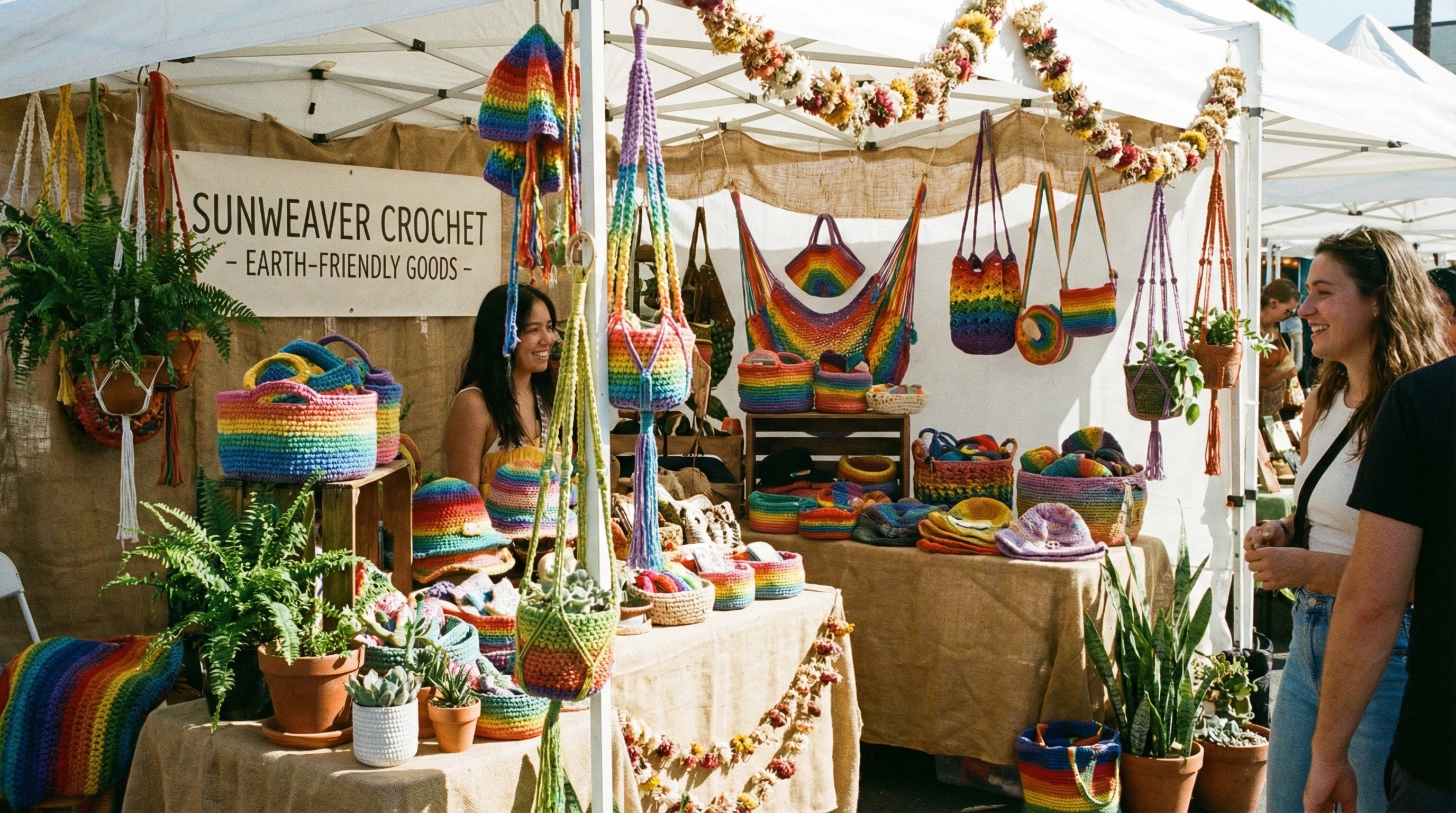
- Display Counts: Attracting shoppers is easier when you display your work on wooden crates, vintage baskets, or plant-friendly backdrops. I always keep the vibe friendly and natural, in line with the market’s energy. You can use mini chalkboard signs to add fun descriptions or prices for a little personality boost.
Staying organized on market days with easy displays, good signage, and a clear payment system, like accepting Venmo or Square, also makes a huge difference. It keeps lines short and puts buyers at ease, knowing they have options to pay however is most convenient.
How to Market Your Crochet Business and Stand Out
Even if your products are amazing, nobody can buy them if they don’t know about your shop. Spreading the word is super important for organic market sellers. I use a few simple but effective ways to draw new customers in and keep people coming back:
- Social Media Presence: Instagram and TikTok are goldmines for sharing crochet videos, sneak peeks, customer reviews, and behind-the-scenes shots. I keep my profiles active, post regularly, and interact with local community hashtags. Stories, time-lapse videos, and “how it’s made” clips are always a hit, and people enjoy sharing fun market moments that feature your creations.
- Business Cards or QR Codes: I leave cards or display a QR code linked to my store, Instagram, or email signup. This helps shoppers find me online after the market, which is great for repeat business or custom orders. Offering a follow-up discount code on social can turn a browser into a loyal customer.
- Special Promotions: I offer bundle prices (“3 for $18!”), flash sales for market mornings, or loyalty deals for returning customers. Little perks and freebies, like a tiny sample scrubbie with a larger order, go a long way toward boosting sales and goodwill.
- EcoFriendly Packaging: Recycled paper, kraft bags, or reusable gift bags for wrapping make an impression. I find people appreciate the detail, and it matches the organic vibe. You can even offer a small discount for shoppers who bring their own bags to keep things earth-friendly.
- Collaborations with Other Vendors: I’ve teamed up with flower sellers or soap makers for cool gift sets. Working together helps everyone reach more customers at once, and it builds community among the vendors. Sometimes joint promotions on social lead to even more exposure.
And above all, I always chat with customers about my process, the yarn, and why I crochet. People really connect with makers when each piece has a story. Don’t be shy about explaining your creative spark, your favorite patterns, or the eco-friendly touches you use in every stitch.
Quick Guide for Setting Up at Organic Markets
Getting started at your first market might feel overwhelming, so I’ve put together my own checklist to help you breeze through setup and make the most of your day. Whether you’re solo or bringing a friend to help, preparation pays off:
- Scout the Market: Visit in advance, check the crowd, and talk to other vendors to see what’s working. Watch for foot traffic, identify gaps in product offerings, and note any popular displays or creative setups that catch your eye.
- Prep Your Inventory: Bring a mix of bestsellers and a few showstoppers to catch eyes. Keep track of what sells for next time, and don’t forget to label sizes and fiber types if that’s something customers might care about (allergy-friendly yarn, for example, can be a selling point).
- Plan Your Layout: Map out your display at home to make setting up stress-free. Simple risers, natural baskets, and lots of color help. You’ll want to make it easy for shoppers to touch items and get up close, so avoid clutter and keep popular items in the spotlight.
- Prepare Payments: Set up a payment app or card reader, and bring change for cash sales. Display your accepted payment types clearly to avoid confusion.
- Stock Extra Supplies: Don’t forget scissors, extra tags, price stickers, hand sanitizer, a portable phone charger, water, snacks, and a notebook for custom requests. Staying comfortable and prepared keeps the day fun and helps you solve problems without stress.
Being prepared means you can spend more time talking with shoppers and less time juggling boxes under your table. You can also devote more energy to new connections, where many custom orders and repeat customers come from.
Addressing Common Challenges for Crochet Sellers at Markets
Market life is fun, but it comes with some common hiccups. Here are a few things I’ve run into, and my best tips for handling them:
- Weather: Sudden wind or rain can make a mess. Tents, tablecloth weights, and waterproof bins are really helpful. Always have a plan for a quick pack-up if bad weather sneaks up, and bring extra towels or cloths just in case.
- Stocking Enough: It’s tough to predict what will be a hit, but having a handful of smaller items pays off for busy days. Try out new color combos or limited-edition runs to see what shoppers love, and don’t worry if not everything sells out; leftover stock can always be offered online or saved for the next event.
- Pricing Drama: Some folks want to haggle. I stay clear but flexible. I offer bundles or discounts toward closing time, if needed. Just remember, sticking to your pricing protects your business and sets the right tone for all customers.
- Burnout: Big markets mean long hours prepping inventory. I take regular breaks and keep it fun by listening to podcasts or crocheting with friends. Switching up my product line or working on personal projects can help keep things fresh if you start to feel stuck in a rut.
Staying flexible and a little bit overprepared always helps when market surprises pop up. Plus, every market is a learning opportunity. Don’t be afraid to make small changes and adjust your plan as you gain experience—you’ll get better with each event!
Answers to Top Questions About Selling Crochet at Organic Markets
What are the most profitable crochet items to sell?
Reusable market bags, sunhats, crop tops, small plushies, and spa items (like face scrubbies or washcloth sets) usually offer a great balance of profit per item and quick sales, especially at venues where people want practical, eco-friendly, or giftable things. Unique colorways and themed collections can help you stand out and boost your average sale.
Why is Gen Z obsessed with crochet?
Gen Z buyers like crochet because it taps into both vintage style and sustainable living. Social media gives crochet a new life, and handmade pieces let them show off their personality while supporting small creators. Some enjoy learning crochet themselves, inspired by what they see online.
How can you build a crochet business that is profitable?
Pick products you can make efficiently with quality materials, price realistically, and offer a focused collection. Consistent branding and staying active both in markets and online (through social media or a small online shop) help a lot. Don’t forget to gather customer feedback and adjust your offerings based on what actually sells—feedback is gold.
How do I market my crochet business?
Staying visible on Instagram by mentioning market appearances, sharing behind-the-scenes content, and linking up with other local small businesses builds your network and attracts new buyers. On market days, friendly interaction and an eye-catching setup are your best tools. Always invite happy customers to share photos of your items in action—you never know who might see it next!
Organic Market Success with Crochet: Wrapping Up
Growing a crochet business at organic markets gives you a chance to meet your buyers face to face, try out fresh ideas, and connect with your local creative scene in a way online shops just can’t match. Careful planning, a focus on quality, and a welcoming booth vibe make every weekend at the market a bit more successful. Keep making, keep learning from your customers, and enjoy sharing your passion. It’s worth every early-morning setup and late-night stitching session, and maybe you’ll stumble upon friendships or inspiration you never expected along the way!