
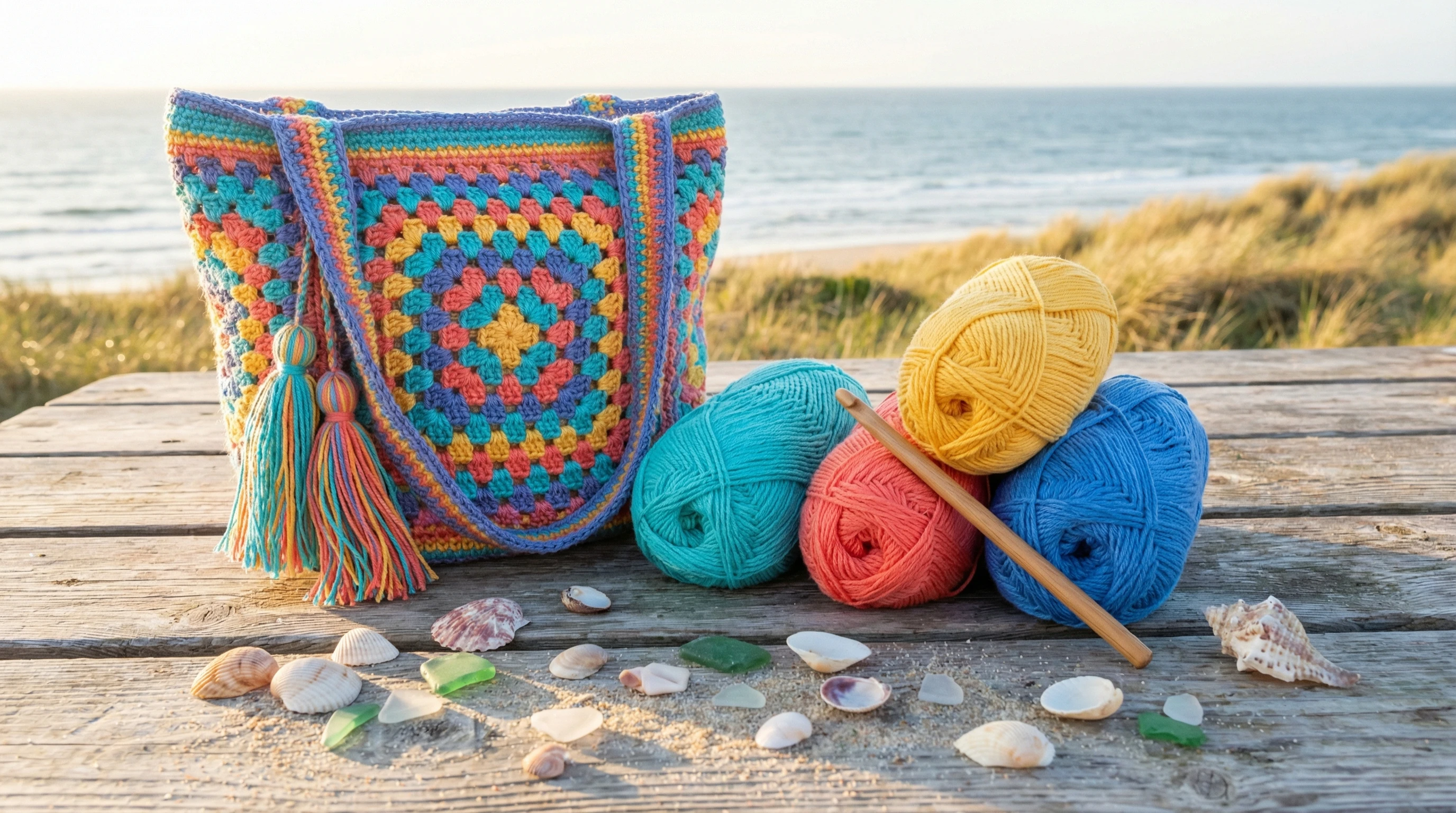
If you’re after a simple, stylish, and super practical project, crocheting your own beach bag is a solid choice. A handmade tote comes in handy for day trips, pool visits, or errands around town, and it’s not as tricky as it might seem. Even if you’re new to crochet, this guide breaks down the entire process step by step, with tips on choosing yarn, choosing stitches, and finishing your bag with a professional look.
What Makes a Crochet Beach Bag Beginner-Friendly?
Tackling a crochet tote is a smart way to get into more functional projects after practicing basics like scarves or dishcloths. Beach bags use simple repeat patterns, chunky yarns, and basic stitches, so you’ll get lots of practice and finish with something useful. Unlike wearables that might be fiddly or complicated, amigurumi, most beach bag designs skip any tough shaping and rely mainly on easy-to-learn stitches.
The easiest things ever to crochet generally use foundational patterns: classic dishcloths, granny squares, and basic rectangles or circles. A simple market-style tote bag is pretty similar to a giant granny square, but with a little more flair and some sturdy straps. It’s a fun next step after making your first blanket or scarf.
Supplies You’ll Need for a Crochet Beach Bag
Choosing the right materials helps your tote stand up to sand, sun, and maybe even a bit of splashing. Here’s what I reach for when making a crochet beach bag:
- Yarn: The best yarn for crochet beach bags is cotton or a sturdy cotton blend. Cotton stands up well to water, dries quickly, and keeps its shape even with repeated use. Mercerized cotton is a solid pick for extra durability and a slight sheen. Avoid very stretchy or fluffy acrylics, as these tend to sag and don’t love moisture. T-shirt yarn, raffia, and recycled tape yarn are also worth checking out for chunky, quick-to-make bags.
- Crochet Hook: Go with a hook size that matches your yarn label or is slightly larger for a looser, more breezy fabric, which is great for summer bags.
- Scissors and Tapestry Needle: For finishing off your yarn tails and seaming any joined sections.
- Stitch Markers (optional): If you want to mark rounds or keep track of stitch counts. Bobby pins work in a pinch.
Extra add-ons like magnetic snaps, button closures, or an insert pouch are optional but can make the finished tote even more useful. If you plan to use your bag at the pool or for groceries, a waterproof pouch or liner is a clever idea. Add charm by attaching a keyring or tassel to your handles or by stitching your initials into the side panel for a personal touch.
How to Make a Bag Step by Step for Beginners
Here’s a straightforward, easy-to-follow pattern for a classic, roomy crochet beach bag. The process is broken down so you can check off each step as you go, even if you’re figuring things out as you go.
- Choose Your Yarn and Hook: I usually grab a worsted-weight cotton with a 5.5mm (I-9) hook for a sturdy but flexible bag. About 300 to 350g of yarn will make a generously sized tote with two straps.
- Start the Base: Most beach bags use either a rectangular or oval base. A super easy rectangle base starts with a foundation chain (about 35 chains gives you a bag wide enough for a towel and sunscreen).
-
- Single crochet (SC) into each chain, turn, and keep going for 10 to 12 rows to build up the bottom panel. This makes the bag strong and helps it stand up on its own.
- Work the Body: Once the base is done, you’ll start working around the panel in continuous rounds.
-
- Use single crochet, half double crochet (HDC), or double crochet (DC) stitches all the way around the base; it’s up to the look and speed you want.
- Mark your round beginning so you don’t lose track.
- Keep crocheting in rounds, building up the walls of your bag. Stop when your bag is the height you like, usually between 13 and 16 inches for beach bags.
- Add Simple Pattern Rows (optional): If you’re feeling adventurous, switch up a few rounds with mesh rows (chain stitches and single/double crochet) for a breezy, open look. This helps sand slip out and gives the bag a light, airy style. Even just a couple of mesh rounds near the top look cute and serve a purpose for beach days.
- Create the Handles: When the body is the right height, it’s time to add wide, reinforced handles so your bag is comfy to carry, even when filled up.
-
- Single crochet for a few stitches, chain 30 to 45 (depending on how long you want your strap), skip a chunk of stitches for the handle opening, then join the chain back into the round with more single crochets.
- Repeat on the other side for a second strap.
- Work a couple more rounds on top of the strap base, crocheting across each handle chain for extra width and strength.
- Finish Off: Cut your yarn, pull through, and weave in all tails securely so nothing unravels. Block the bag if you want it really square and crisp. Tighten all connections for long lasting durability, especially on bag handles.
Personalizing your tote is easy. Try a striped base, color block side panels, or small appliques. Adding a tuck stitch or surface slip stitches to the sides can give unique texture and set your bag apart from store bought totes.
Common Crochet Stitches Used in Beach Bags
- Single Crochet (SC): Super basic and holds its shape well. Great for bases and handles.
- Half Double Crochet (HDC): Fast to work and slightly more airy than SC. Gives a bit more stretch but still looks neat and is easy for beginners.
- Double Crochet (DC): Creates an open, light fabric, which works nicely for the sides and helps speed up the project.
- Mesh Stitch: Usually made with double crochet and chain stitches, perfect if you want an open, beachy vibe that helps the sand fall through and gives your bag breathability.
If you want to learn or brush up on these stitches, Yarnspirations’ beginner crochet guide and LoveCrafts tutorials are both super useful. Watching video tutorials while working through your first project can help you spot mistakes and fix them before they get too far along.
Practical Tips for Customizing Your Crochet Beach Bag
- Yarn Color and Thickness: Don’t be shy with colors. Bright, summery shades make your bag easy to spot on the sand or at the park. Mixing colors in stripes or blocks is a fun way to add personality that reflects your style.
- Handle Length: Test the strap size across your shoulder before tying off to get the perfect carry length that fits your needs, whether you wear your bag crossbody or over one shoulder.
- Add a Pocket: Crocheting a simple rectangle and stitching it inside the bag makes a handy spot for keys or sunglasses. If you want more organization, add multiple pocket sizes or make a zip pouch to attach.
- Lining: Sew in a light fabric lining if you want to prevent stretching; this works well with very open stitches or if you carry heavier items. Choose a liner that dries quickly in case your bag gets wet at the beach or pool.
If you’re interested in eco-friendly choices, try using recycled cotton yarn or upcycled t-shirt yarn to reduce waste while creating something you’ll love. You can also switch up the shape, making your tote circular, square, or even hexagonal, depending on the pattern you follow or dream up yourself.
Things to Know Before Crocheting Your First Bag
- Yarn Choice Matters: Stick with 100% cotton or similar sturdy blends for projects headed to the beach. Cotton doesn’t pill easily and holds its shape even if it gets damp. Plus, it comes in loads of colors to match your swimsuit or towel.
- Gauge Isn’t Everything: Beach bags aren’t fussy about being exact, but keep your stitches tight so small items don’t slip out. Use a smaller hook than usual if your bags tend to come out too loose.
- Crochet Bags Can Stretch: Heavier loads or looser stitches may stretch out your bag a bit, especially after some use. Finishing with a sturdy edge and reinforcing handles can help avoid this, while a liner will further protect the shape.
- Practice Patience: Larger projects like beach bags take a bit longer, but the repeat stitches make this the kind of project you can pick up and put down without losing your place. Bring it along to the park or beach and work on it while you relax.
One other thing to keep in mind: if you plan to bring your bag into salty or chlorinated water, make sure your yarn can handle it. Cotton is the top choice here, while wool or nylon blends are less ideal for sun and water exposure.
Frequently Asked Questions
How to make a bag step by step for beginners?
Start with a rectangular or oval base in single crochet, work the body in rounds with simple stitches until you reach your preferred height, then add handles with chain stitches. Use sturdy cotton yarn and reinforce the handles for a long-lasting finish.
What is the easiest thing ever to crochet?
Squares and rectangles are the easiest, especially dishcloths or beginner scarves. Beach bags are almost as beginner friendly, using mainly single and double crochet stitches to create a functional accessory.
What is the best yarn for crochet beach bags?
Cotton or a sturdy cotton blend works best. Mercerized cotton, recycled t-shirt yarn, or raffia yarn are also good choices because they’re durable, washable, and hold up well in the sun and sand. Check out options that use upcycled or ecofriendly fibers for a sustainable project.
Wrapping Up
Making your own crochet beach bag is a great way to grow your skills, end up with something you’ll use all summer, and show off your personal style. Go at your own pace, have fun with your yarn choices, and don’t hesitate to tweak the length or add a pocket for your snacks. After your first bag, you might find yourself hooked on crocheting all kinds of handy totes for family and friends, too. Take your time and enjoy the adventure of crafting a bag that’s perfect for your next day in the sun.