
Sustainable crochet isn’t just about making cute things. It’s about making smart choices for the planet and your craft. As I’ve checked out eco-friendly crafting, I’ve stumbled upon a bunch of methods and materials that make a big difference in how crochet impacts the world. Let me break down what I’ve learned about sustainable crochet techniques, yarn options, and practical steps to make your hobby a bit greener.
Why Crochet Sustainably?
If you’re wondering what the point of focusing on sustainable crochet is, it comes down to caring about waste, the environment, and your health. Every year, the fashion and craft industries create a huge amount of waste, often from synthetic yarns and mass-produced products. When you crochet sustainably, you help reduce landfill waste, keep chemicals and microplastics out of water streams, and support better production methods that are easier on the earth.
I’ve also noticed that using eco-friendly yarns and methods often gives my projects extra meaning. They last longer, look unique, and are less likely to irritate your skin. Sustainable crochet can spark some cool creative challenges, pushing you to try new fibers and patterns. It’s a win for you and the planet.
Is Yarn Sustainable?
Some yarn is sustainable, and some isn’t. Yarn comes from animal, plant, or synthetic fibers. Each yarn has a different effect on the environment.
- Natural Fibers: Wool, alpaca, and silk are animal-based. If they’re sourced ethically, using cruelty-free and low-impact farming, they’re usually eco-friendly. Always check how the animals are treated and how the fiber is processed.
- Plant-Based Fibers: Cotton, bamboo, linen, and hemp are in this group. Organic cotton and hemp yarns need fewer pesticides and water, which is good for the environment. Bamboo can be sustainable, but sometimes it’s heavily processed with chemicals, so I always look for brands committed to greener production.
- Synthetics: Acrylic, polyester, and nylon come from petroleum and don’t break down in nature. They’re affordable and colorful, but not really green. Some companies now offer recycled acrylic or blends, which are worth checking out if you want that soft, easy-care feel without as much guilt.
Checking the label for certifications like GOTS for organic fibers or OEKO-TEX for chemical safety helps me know I’m buying something less wasteful and safer.
How Crochet Can Be Sustainable
Sustainable crochet is more than picking an eco-friendly yarn. It’s about the bigger picture: choosing responsible materials, reusing scraps, and thinking about what happens to your finished crochet items after you’re done with them. Here are a few ways I bring sustainability into my crochet routine:
- Buy Less, Use More: I keep a stash of leftover yarn and scraps for future projects. It’s super satisfying making grannysquares from those bits instead of tossing them out.
- Repurpose: Old sweaters can become new yarn if you unravel them. I’ve turned thrift store scarves and knitwear into fresh supplies for crochet projects, and it’s always a fun adventure to see what unique textures or shades you’ll stumble upon.
- Choose Long-lasting Patterns: Making items you’ll use for years—like reusable shopping bags or dishcloths—instead of following quick trends keeps your hard work out of the landfill.
- Fix and Mend: Repairs and patching give life to worn-out blankets or sweaters, so you don’t have to replace them.
Sustainability is a mindset. Think about your craft as part of a cycle—what you make, how you make it, and what happens later.
Popular Sustainable Crochet Methods
Here are some super useful techniques and tips I turn to when I want my projects to stay on the green side. Each of these helps you get more out of your materials and helps protect the Earth while you crochet.
1. Upcycling Yarn and Materials
Unraveling old sweaters is probably my favorite way to get high-quality yarn at almost no cost. Look for knitwear made with natural fibers (like wool or cotton), snip the seams, and carefully pull out the threads. You can also cut up old t-shirts into yarn—just slice them into long strips for chunky projects like bathmats or baskets. Dig into your closet or the thrift store; you never know what treasures you’ll track down!
2. Zero Waste Crochet
Zero-waste crochet means using even your tiniest scraps. I often join small pieces together for striped projects, multicolored amigurumi, or decorative edging. You can also stuff scrappy bits into crocheted pillows or toys, keeping fiber out of the trash.
3. Conscious Pattern Selection
Some crochet patterns use more yarn or create more waste than others. I like to pick patterns that use efficient stitch repeats, avoid too much snipping and joining, and don’t create extra leftovers. Reversible and seamless designs are great for reducing waste.
4. Eco-friendly Dyeing
Plant-based dyes can give your yarn a whole new look without harsh chemicals. I’ve experimented with avocado pits, onion skins, and turmeric to get eye-catching earthy colors. It’s straightforward, fun, and you avoid adding pollutants to waterways. There are many guides online for natural dyeing—give it a go!
5. Choosing Local and Ethical Yarn Producers
Buying yarn made close to home—or directly from small farms and mills—cuts down on the environmental impact of shipping. These sources usually have more transparent production standards, so you can see exactly how and where your yarn was made.
Different Crochet Techniques (And How to Make Them Sustainable)
Nearly every crochet technique can be made more eco-friendly with thoughtful yarn choices and a bit of creative thinking. Here are some common styles I use, plus my go-to green tweaks:
- Amigurumi: Crocheted stuffed animals are fun but need a lot of filling. To keep these projects green, I use cotton or linen yarn and recycle old fabric as stuffing. It makes every toy unique, and I like knowing it doesn’t add to landfill waste.
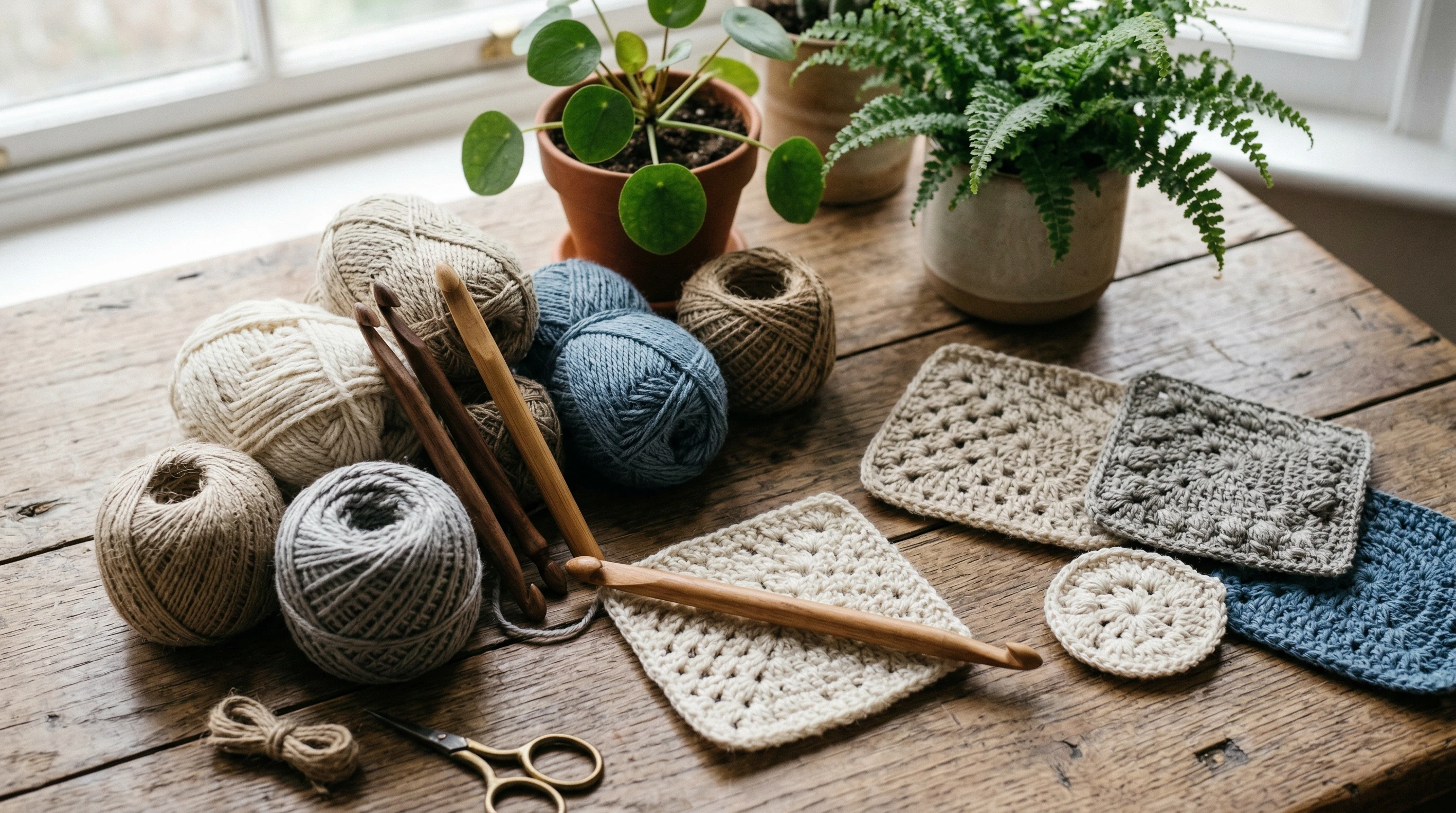
- Granny Squares: These classics are perfect for using up scraps. I make patchwork blankets by joining squares in all different colors—no need for new yarn, and each one tells its own story.
- Filet Crochet: This uses an open meshwork, which is lighter on yarn, especially if you use leftover thread or recycled cotton. It’s excellent for table runners or breezy summer tops.
- Tunisian Crochet: It makes a thick, cozy fabric, and works great with chunky upcycled t-shirt yarn or recycled wool. These projects last for ages and offer lots of warmth.
- Lace and Doilies: Crocheting with thread—especially if it’s recycled—makes lovely gifts and home decor. Doilies are perfect for using up tiny remnants that might otherwise get tossed.
FAQ About Sustainable Crochet
I get a lot of questions from crafters about this topic, so here are clear answers based on my experience:
Q: What’s the best way to start crocheting sustainably?
A: Start small. Use what you have, look for better yarns when you shop, and keep things simple. Even lining your project bag with scraps or making your own pouches from old fabric is a green win.
Q: Are there truly eco-friendly yarn brands?
A: Yes. Brands like Rowan, Quince & Co., and Blue Sky Fibers offer lines focused on organic, recycled, and responsibly sourced materials. It’s worth checking out the details on their websites or product pages before you buy.
Q: Do natural fibers always mean sustainable?
A: Not every time. Even natural fibers can have a high ecological footprint if they’re heavily processed or shipped long distances. Certifications and local sourcing go a long way toward lowering that impact.
Final Tips for Greener Crochet
Sustainable crochet is as much an adventure as it is a practice. Building eco habits—like sharing yarn with friends, swapping patterns, and buying secondhand—can make this hobby much lighter on the planet. Every little step, from the fibers you pick to how you care for your projects, adds up to something better for everyone.
Crafting with intention means not just making beautiful things, but also making choices that reflect your values. Whether you’re a total beginner or have crocheted for years, there’s always a new trick or technique to try that can help you make your crochet more sustainable. The bottom line: thoughtful choices lead to greener crafting—and that’s something worth celebrating every time you pick up your hook.