
If you are choosing the best organic cotton yarn for crochet bags, softness and colour range tell you little about how the finished bag will behave. A bag that is carried daily gets loaded with a laptop, a water bottle or groceries, hung on a shoulder, dropped on floors and washed when something spills. The yarn has to hold its shape through all of that.
This article judges organic cotton yarns by the traits that matter under those conditions: ply construction, twist, stitch definition under load, strap stretch and how the fabric wears after repeated washing. It also gives you a way to test any skein yourself before you commit to a full bag or a batch for sale.
What a daily-use bag asks of its yarn
A bag puts stress on yarn in ways a scarf or a blanket never does. The body of a tote carries weight pulling straight down on every stitch. The strap carries the whole load across a narrow strip of fabric. The base takes abrasion every time you set the bag down.
That gives you four requirements:
- Low stretch under load. Cotton has very little elasticity. Once the fibres are pulled out of position they do not spring back, so a bag that sags on day one will sag permanently.
- Stitch definition that survives use. If the yarn splits or fuzzes, the stitches blur and the fabric loses its density, which is what keeps small items from poking through.
- Abrasion resistance. The base and the strap contact points rub against clothing, car seats and tables.
- Stability in the wash. Cotton shrinks, and it can distort unevenly. A bag that comes out of the machine lopsided is hard to bring back.
Softness works against several of these. A very soft, loosely spun yarn feels pleasant in the skein and tends to be the first to stretch, pill and split. Treat softness as a minor consideration for a bag and judge the yarn on structure.
Ply, twist and weight: the yarn traits that decide whether a bag sags
Cotton fibres are short, so a cotton yarn holds together mainly through twist. The way a yarn is spun and plied therefore says more about bag performance than the fibre content on the label.
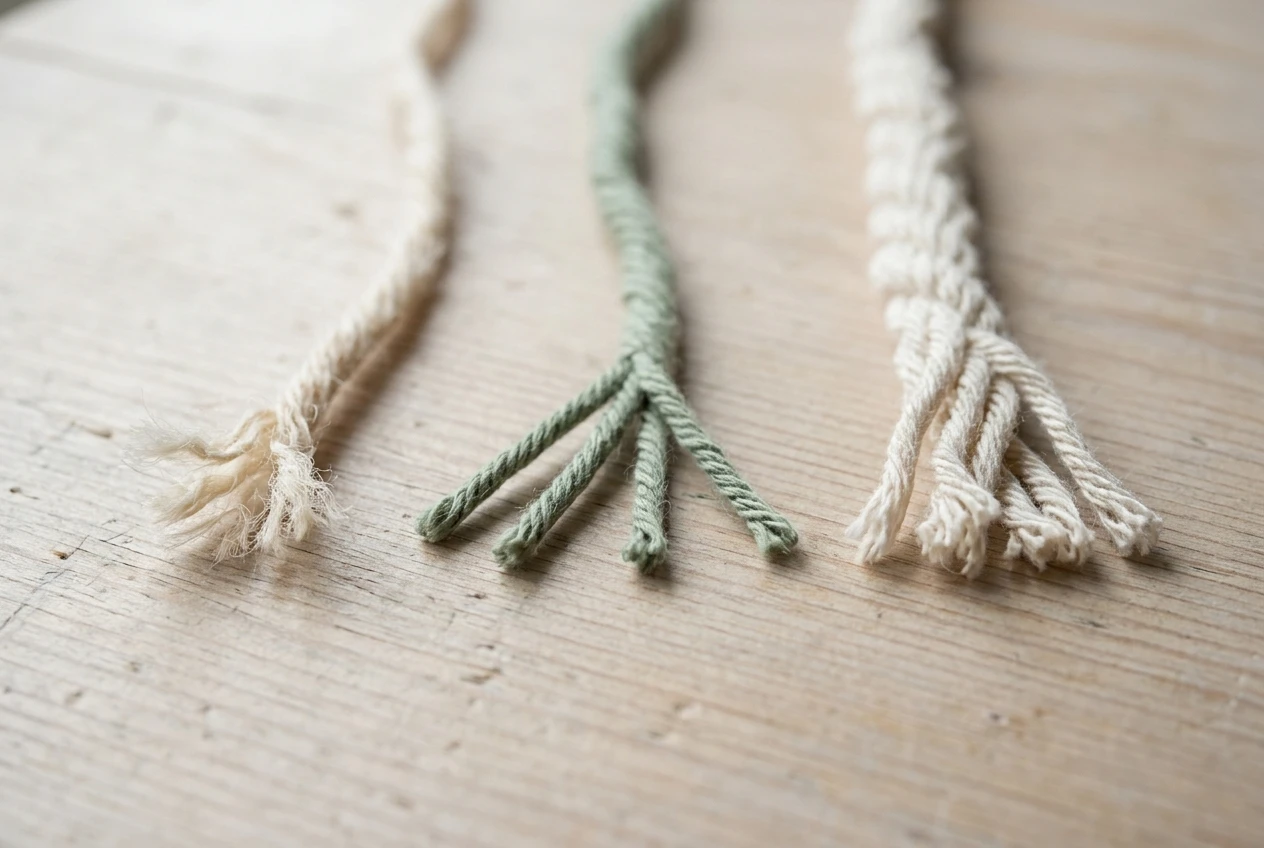
Ply construction
A ply is a single spun strand. Most cotton yarns twist several plies together, and the number and arrangement change how the yarn behaves.
- Single-ply yarn is one spun strand. It is soft and drapey but has the least internal support, so it tends to stretch, split under the hook and pill with rubbing.
- Multi-ply yarn (three, four or more plies) is more stable. The plies lock against each other, which resists splitting and gives rounder, clearer stitches.
- Cabled yarn twists plied strands together again. It is firm and round, and it gives very crisp stitches. It can be harder on the hands, but it is among the strongest constructions for a bag body.
If you cannot tell the construction from the label, untwist the end of the yarn and count the strands. It takes ten seconds and is more reliable than the product description.
Twist
Twist is how tightly the strands are spun. A tightly twisted yarn feels slightly hard and rounded. It resists snagging and keeps stitch definition, but it can twist back on itself while you work and make the fabric a little stiff. A loosely twisted yarn feels plush and works up fast, but the fibres can slide against each other under load.
For bags, lean toward firm twist. You can soften a stiff fabric slightly with washing, while you cannot restore twist that was never there.
Weight and gauge
Yarn weight matters less than the density you achieve with it. A bag body worked at a tight gauge, using a hook a size or two smaller than the label suggests, has less space between stitches for the load to pull open. Sport, DK and worsted-weight cottons all make good bags when the fabric is dense. A heavier yarn is not automatically sturdier, because a thick yarn worked loosely will gape and stretch more than a thinner one worked tight.
How to test a skein before you commit to a whole bag
Buying enough yarn for a full bag, or a production run, on the strength of a label is a gamble. One skein is enough to find out how a yarn behaves, and the tests below take a few evenings.

Step 1: Work a swatch in the stitch you will use
Use the actual stitch pattern for the bag body, whether that is single crochet, moss stitch or something else. Work it with the hook size you plan to use, around 15 cm square. A swatch in a different stitch tells you little about the finished bag.
Step 2: Check the yarn while you work
Pay attention to the following as you crochet:
- Does the hook split the plies?
- Does the yarn twist up or untwist as you work?
- Does the surface fuzz where it passes through your fingers?
- Do the stitches stay clear, or do they merge into a blur?
Step 3: Run a strap-stretch test
Crochet a strap-width strip about 30 cm long in the stitch you would use for handles. Hang it from a hook and attach a weight similar to what the bag will carry, such as a bag of rice or a few books in a tote. Leave it overnight, remove the weight and measure the strip. Then measure again after an hour.
Growth that does not recover tells you the yarn will stretch in a handle. Straps usually need a denser stitch, a smaller hook, a cord core or a different yarn from the body. The test shows you which.
Step 4: Wash the swatch repeatedly
Measure the swatch before washing, then wash and dry it the way a customer or you would treat the finished bag. Repeat several times, measuring and noting changes each time. Look for:
- Shrinkage, and whether it is even across width and height
- Pilling and fuzzing on the surface
- Colour loss or bleeding
- Changes in stiffness or drape
Step 5: Rub it
Rub the swatch firmly against a rough surface, such as denim or a wooden tabletop, fifty or so times. Compare the rubbed area with an untouched corner. This approximates the wear a base or a strap contact point gets over months.
Keep notes on each yarn you test, with the date, stitch and hook size, so you can compare skeins fairly. If you sell bags, the notes also help you answer customer questions about durability with facts you gathered yourself.
Organic cotton yarn types worth comparing for totes, market bags and straps
Instead of chasing brand names, compare construction types. Each of the following behaves differently, and the same type from different spinners can still vary, so run the tests above on any specific skein.
Multi-ply mercerized organic cotton. Mercerizing is a finishing treatment that makes cotton stronger, smoother and more lustrous, and it helps the yarn take dye. The result is usually a crisp, round yarn with good stitch definition and less fuzzing. Because mercerization is a processing step, check the label or the supplier to see how the finishing was done if that matters for your claims.
Cabled or heavily plied organic cotton. This is the firm, round option. It suits structured totes and market bags where you want clear texture and minimal stretch. It can feel stiff while you work and it softens with washing.
Organic cotton cord. Thicker twisted or braided cord is often sold for macramé and rope-style projects. It makes dense, rigid fabric and is a strong candidate for straps, bases and handles. Cord can be hard to work into fine stitches, and its certification status varies by supplier, so confirm it separately.
Soft single-ply or loosely spun organic cotton. This is the comfortable, drapey type. It works well for lightweight garments and accessories, but it is the least suited to heavy loads. If you like its look, consider using it only in low-stress areas or lining it.
Organic cotton tape or ribbon yarn. Flat tape yarn works up quickly into sturdy, wide-stitched fabric. If you can find an organic cotton version, test it for stretch, since flat constructions can behave differently from round ones and may curl at edges.
Where an organic cotton blend is offered, read the fibre percentages. A small share of another fibre can change stretch and wash behaviour noticeably, and it affects what you can say about the bag in a listing.
Where organic cotton falls short, and when to pair it with lining or reinforcement
Cotton, organic or not, has limits that no construction fully removes. It stretches under sustained load and does not fully recover. It is heavy when wet and slow to dry, and it can hold odours or mildew if stored damp. It also shows wear at stress points before the rest of the bag does.
Those limits are manageable with design choices:
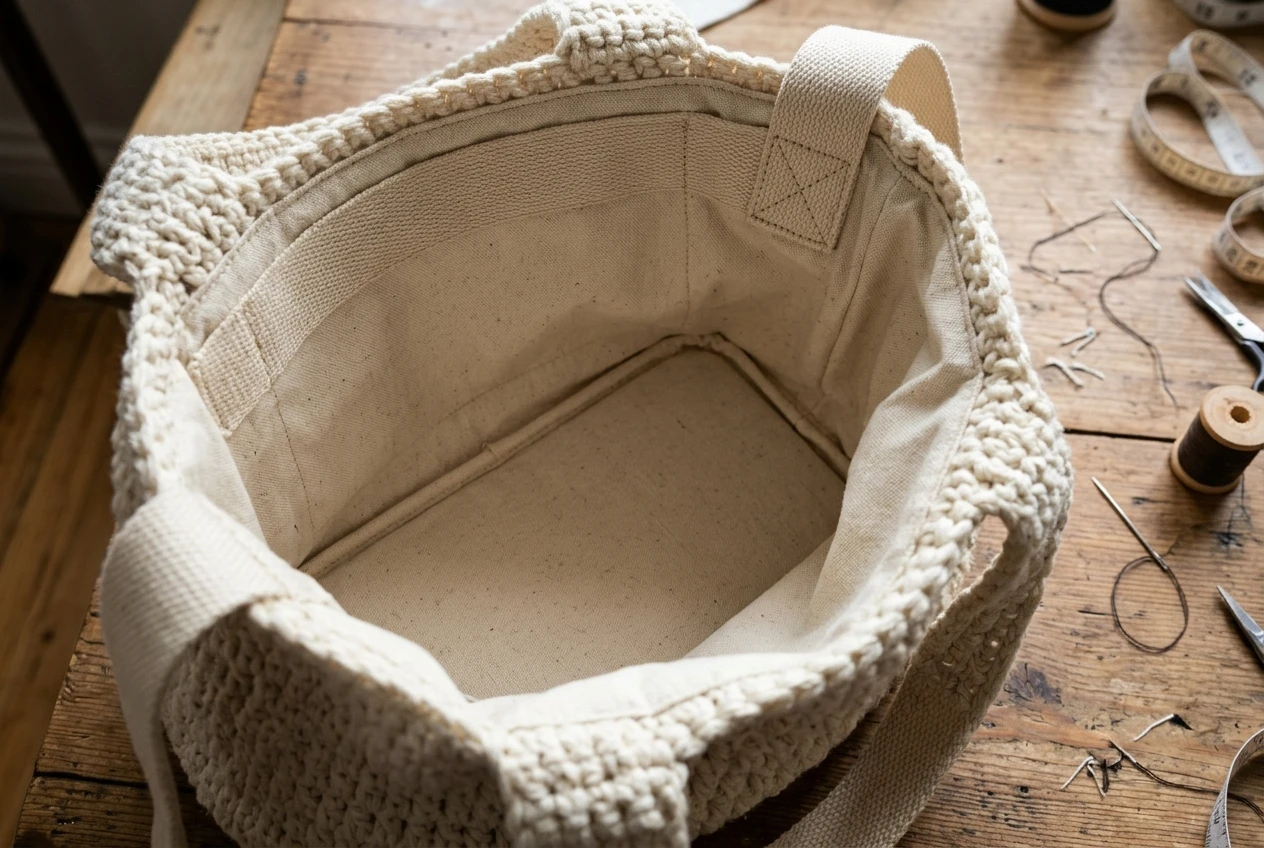
- Add a fabric lining inside the bag body. A woven cotton or canvas lining takes the load that would otherwise pull the stitches open, and it keeps small items from catching in the crochet.
- Stabilise the base with a firm insert, a doubled layer of crochet or a piece of sturdy fabric stitched into place.
- Reinforce the strap attachment points with extra rounds of stitches, a sewn patch or a webbing strip. Handle joins are where most bags fail first.
- Use a core in straps. Crocheting around cotton cord, or stitching a strip of webbing inside, almost removes strap stretch.
- Choose a denser stitch for load-bearing areas, and keep open or lacy stitches for decoration or lightly loaded bags.
Lining and reinforcement add materials, so decide early whether they fit the bag’s sustainability claims and what the lining is made from. If you sell bags, tell buyers what is inside, because it affects care instructions.
Matching yarn to bag type: shoppers, beach bags, everyday crossbody
The same yarn does not suit every bag. Match the construction to the demand.

Shopping and market bags. These carry the heaviest, most irregular loads, so use a firm, multi-ply or cabled yarn at a tight gauge. Add a reinforced base and straps with a core or doubled stitching. A bag of this kind may be washed often, so test the swatch repeatedly in the wash.
Beach bags. Expect water, sand and heavy items such as towels and bottles. Open stitches let sand fall through but also let the fabric stretch, so a firm yarn in a slightly open stitch with a strong base is a reasonable balance. Remember that wet cotton gets heavy and sags more, and rinse and dry the bag fully after use.
Everyday crossbody bags. The loads are lighter, but the strap sits on the body all day and rubs against clothing. Test the strap for stretch and surface wear carefully. A lining helps here, since phones, keys and cosmetics need a stable interior. A smoother mercerized yarn tends to resist fuzzing against jackets better than a fluffy one.
If you plan a series of bags in the same line, choose one tested yarn that handles the hardest case and use it across the line. It keeps the quality consistent and your testing manageable.
Checking certification claims on the label without over-trusting them
Labels such as “organic cotton” or a certification logo are useful starting points, but they do not tell you how the yarn will perform. They concern how the fibre was grown and, depending on the scheme, how it was processed. They say nothing about ply, twist or strength.
Some practical checks:
- Know what the certification covers. Some standards cover only the organic content of the fibre. Others also cover processing, dyes and social criteria. Look up the scheme named on the label and read what it actually certifies.
- Check the percentage. A label may refer to a product with only part organic fibre. Read the stated organic content rather than assuming 100 percent.
- Ask for the certificate details. A reputable supplier can give you the certification body and certificate number. Certification bodies often provide a public database for checking a certificate is current.
- Look at the seller as well as the spinner. Certification can apply to a particular facility or product line, so a logo on a retailer’s page does not guarantee that the exact skein in your hand is covered.
The same caution applies to your own listings. Only claim what your supplier documents can support, and describe your bags in the terms those documents allow. For more background on how fibre travels from field to skein, the guide on understanding the eco yarn supply chain is useful.
Keeping a well-made bag strong over time
Good yarn choice gives you a bag that starts strong, and a few habits keep it that way. Empty the bag and shake out grit before washing, since sand and crumbs wear at stitches. Wash gently and reshape the wet bag by hand, stuffing it with a towel so it dries in its proper form rather than collapsing. Dry it fully before storage to avoid mildew.
Avoid hanging a loaded bag by its strap when you are not carrying it, since sustained weight is exactly what stretches cotton. Rotate between bags if you carry heavy loads regularly. Check the strap joins and base every few weeks, because early repair of a loose stitch is much easier than fixing a torn section. The care guide on how to care for sustainable crochet items covers washing and storage in more detail.
Once you have chosen a yarn and made your bag, the next question is where it will wear first. Handle joins, the base corners and the rim are the usual weak points. Our guide on spotting when to reinforce crochet stitches shows you how to find those spots and strengthen the bag you have just made with the yarn you chose.